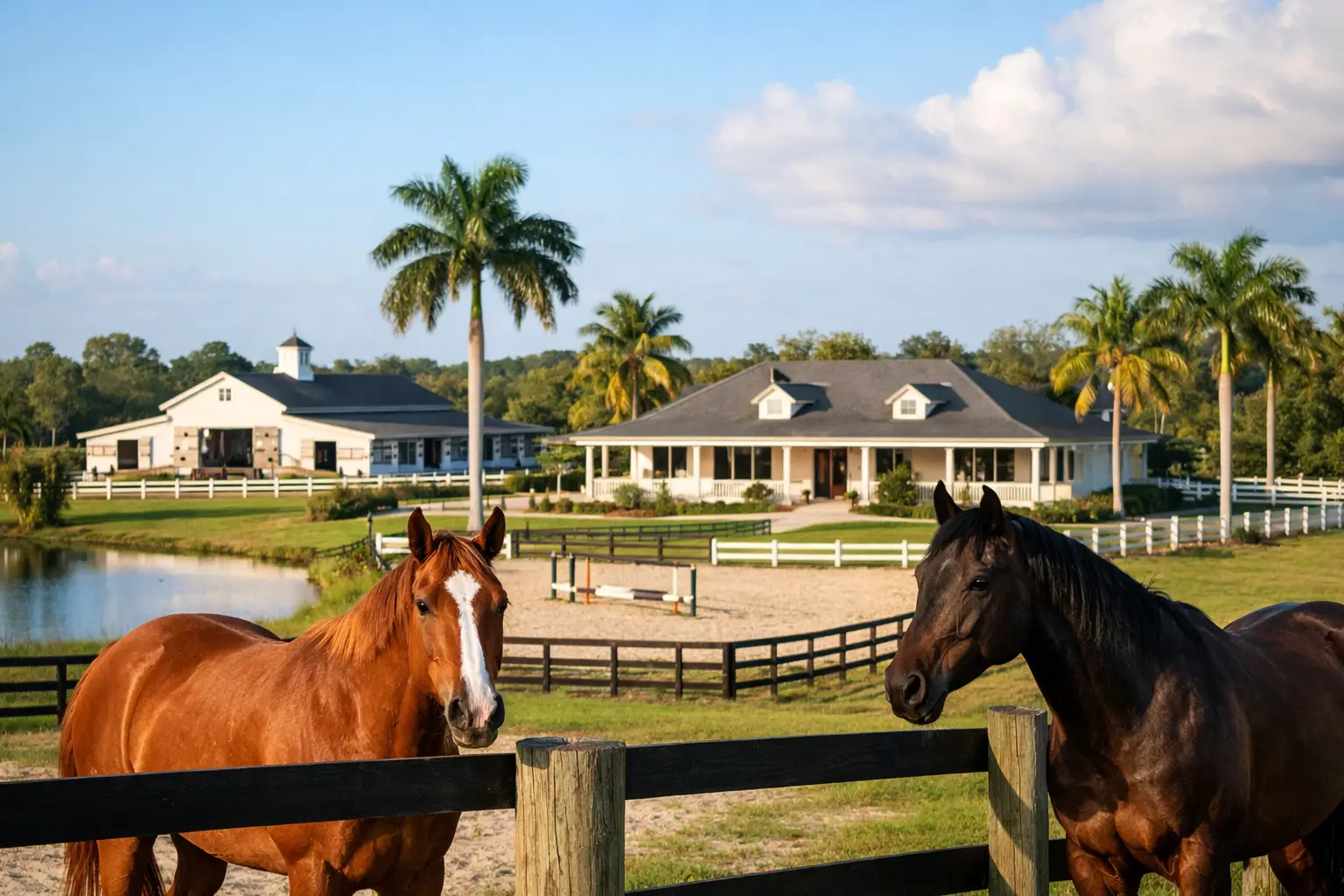
A horse property in Davie can look perfect in photos and still miss the mark the minute you pull into the driveway. The arena may be too small for your riding style. The barn layout may create more daily work than it saves. Even a beautiful home can become the wrong fit if trailer access, drainage, or zoning are off. That is why buyers searching davie fl horse properties for sale need more than square footage and bedroom counts. They need a clear way to judge how the property will actually live, ride, and hold value.
Davie stands out because it offers something that is getting harder to find in South Florida – an equestrian lifestyle with meaningful access to city conveniences. You can have land, barns, and riding space while staying close to major roads, shopping, dining, and employment centers. For buyers who want horses without feeling disconnected from everything else, that balance is a big part of the appeal.
Why Davie attracts horse property buyers
Davie has a long-standing equestrian identity, and that matters more than people think. In some markets, horse properties are scattered and treated like exceptions. In Davie, equestrian use is part of the local character. That often translates into neighborhoods where horse ownership feels normal, nearby services are easier to find, and buyers are less likely to feel like they are forcing a rural lifestyle into a suburban setting.
There is also a practical side. Access to riding trails, training facilities, feed stores, veterinarians, and farriers can shape your day-to-day experience as much as the property itself. A home with five acres sounds great, but if basic horse services are inconvenient, ownership gets more complicated fast. Davie tends to attract buyers because it can reduce that friction.
The other draw is flexibility. Some buyers want a private estate with a small barn and room for a few horses. Others are looking for an income-producing setup with boarding potential, training space, or a property that can support a more serious equestrian operation. Davie can appeal to both, but the right property depends heavily on your goals.
How to evaluate Davie FL horse properties for sale
The biggest mistake buyers make is judging a horse property like a standard residential home with extra land. Horse real estate works differently. The house matters, of course, but the land, layout, and use restrictions often matter just as much.
Start with the acreage, but do not stop there. Usable land is what counts. A property may advertise a generous lot size, but wetlands, poor drainage, awkward shape, or setbacks can limit what you can actually do with it. A smaller parcel with better layout and footing may serve your needs far better than a larger one with major constraints.
Barn design deserves close attention. Stall count is only one part of the equation. You also want to look at aisle width, ventilation, tack storage, wash racks, feed room setup, turnout access, and how easy it is to move horses through the space. A barn that looks polished in listing photos may not function well during a busy morning routine.
Riding infrastructure is another point where buyers should slow down and ask better questions. If there is an arena, what is the footing like and how is it maintained? Is it properly drained? Is there enough room for your discipline? A dressage rider, hunter-jumper rider, and recreational trail rider may all define a useful riding setup differently. It depends on how you actually plan to use the property.
Then there is access. Can a trailer enter and turn comfortably? Is there room for parking and loading? Does the driveway work during heavy rain? South Florida weather makes drainage and access more than minor details. They can directly affect safety, maintenance costs, and resale appeal.
The zoning question you cannot skip
When buyers look at davie fl horse properties for sale, zoning should move to the top of the checklist early. Not later. Early.
You want to confirm how many horses are allowed, whether agricultural or equestrian use is permitted as currently improved, and whether there are restrictions tied to structures, boarding, business activity, or future additions. If you hope to add an arena, expand a barn, install paddocks, or run any kind of revenue-generating horse operation, zoning and local regulations will shape what is realistic.
This is where expectations matter. Some buyers want a peaceful private setup for personal use. Others are thinking ahead to lessons, training, or boarding income. Those are very different ownership paths. A property that is ideal for one may be limiting for the other. A smart purchase starts with clarity on your intended use.
What affects value beyond the home itself
Horse properties are more specialized than typical homes, which means value is driven by a different mix of features. The residence still matters, especially for financing and broad market appeal, but equestrian improvements can heavily influence both price and marketability.
Condition matters more than headline features. A newer roof on the barn, quality fencing, reliable drainage, and well-maintained paddocks may add more practical value than a long list of cosmetic upgrades. Buyers who understand horse properties tend to notice the expensive basics first.
Location within Davie also plays a role. Proximity to major routes, desirable equestrian areas, and nearby amenities can strengthen demand. At the same time, a quieter setting with more privacy may command interest from buyers who prioritize a true estate feel. There is no single formula. Some buyers will pay for convenience. Others will pay for separation and space.
Future flexibility can also support value. A property that works today for private use but could later support expanded equestrian improvements, guest quarters, or a more customized setup may stand out over time. In a niche market, adaptability is a meaningful advantage.
Financing and insurance can look different
Buyers are often surprised that horse properties can raise extra questions from lenders and insurers. That does not mean financing is out of reach. It means preparation matters.
Lenders may look closely at acreage, outbuildings, property use, and whether the home is viewed primarily as residential or more specialized real estate. Insurance carriers may also pay attention to barns, liability exposure, fencing, and the age or condition of structures. If the property includes features like riding arenas or boarding elements, underwriting can become more detailed.
This is one reason it helps to work with professionals who understand these property types. A standard home purchase process does not always account for the details that matter here. Getting ahead of those questions can save time and reduce surprises once you are under contract.
Matching the property to your lifestyle
The best horse property is not always the largest one or the one with the fanciest house. It is the one that fits your routine.
If you ride daily and manage your own horses, efficiency matters. You may want short walking distances between the barn, turnout, tack room, and arena. If your horses are mostly for pleasure riding and family use, a simpler setup may be exactly right. If you travel often or expect help with care, ease of maintenance may matter more than adding every possible amenity.
Families also need to balance the equestrian dream with regular life. School routines, work commutes, entertaining space, and long-term household needs still count. The right horse property should support the whole picture, not just one piece of it.
For some buyers, that means prioritizing a better house and a modest barn. For others, it means accepting a home that needs cosmetic updates because the land and horse infrastructure are exceptional. Neither approach is wrong. The better choice depends on what you want your daily life to feel like.
What to do before making an offer
Before you make an offer, walk the property with a practical eye. Ask how water moves after storms. Check fencing closely. Look at barn condition, roof lines, footing, gates, and turnout areas. Think about where hay, bedding, and equipment will go. If you own a trailer, picture how it will move through the site.
It also helps to think one step ahead. If you buy this property and stay for five to ten years, will it still fit? Maybe your riding goals will change. Maybe your family will grow. Maybe you will want a property with stronger resale appeal rather than one built around very niche improvements. Those are smart questions, not overthinking.
An experienced real estate team can help you sort through the trade-offs. Sometimes the property with the most wow factor is the one with the most hidden work. Sometimes the less flashy listing is the better buy because the land, zoning, and functionality are stronger. That kind of guidance can make the process easier and more understandable, especially in a market where details matter this much.
Davie offers a real chance to own a property that supports both horses and everyday life without forcing you to choose one over the other. If you focus on usability, zoning, layout, and long-term fit, the right property becomes easier to recognize when it hits the market.